

How many steps does it take to erect a "giant windmill" that is dozens of stories tall?
How many steps are involved in assembling a giant "windmill"?
The process of building a wind turbine is like assembling giant building blocks. Just as we have instruction manuals when playing with building blocks, the installation of wind turbines follows the Wind Turbine Installation Work Instructions, which spans over a hundred pages!
There are four key steps in the process: tower hoisting, nacelle hoisting, rotor hoisting, and electrical system installation. Once these four steps are completed, a wind turbine standing over a hundred meters tall is erected.
How long does it take to assemble a giant "windmill"?
Assembling a wind turbine, this giant building block, is no easy task. It requires the collaboration of over 30 people and takes about six days to complete the installation of a single wind turbine. And this is under ideal conditions, excluding adverse weather factors such as strong winds, rain, or snow.
How are blades over a hundred meters long installed at a height of a hundred meters?
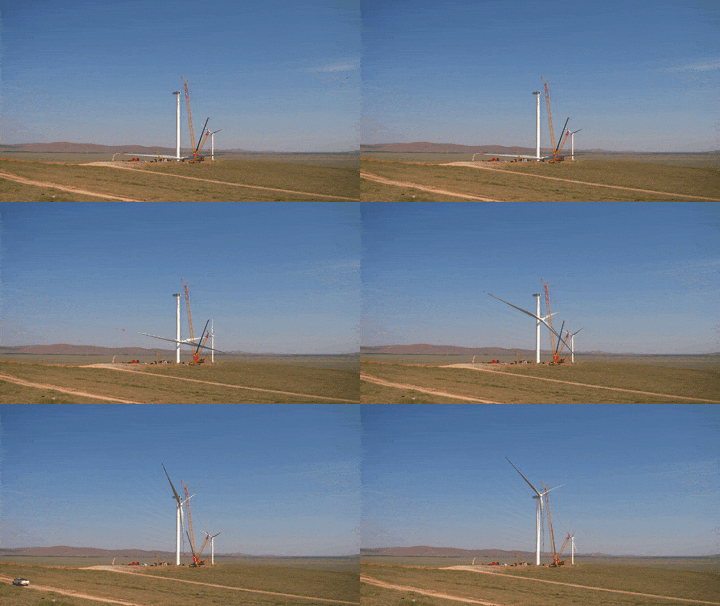
Installing massive blades at a height of a hundred meters primarily involves two steps. The first step is the ground assembly. The three blades must be assembled onto the hub. This step requires great precision, as zero-markings must be pre-aligned on both the blades and the hub to ensure they match perfectly during assembly. The second step is the aerial connection. This involves hoisting the pre-assembled blades and hub as a whole to a height of a hundred meters using a large crane, where they are securely connected and fixed to the nacelle.
"The giant windmill turns with a creak"—how much electricity is generated with each rotation?
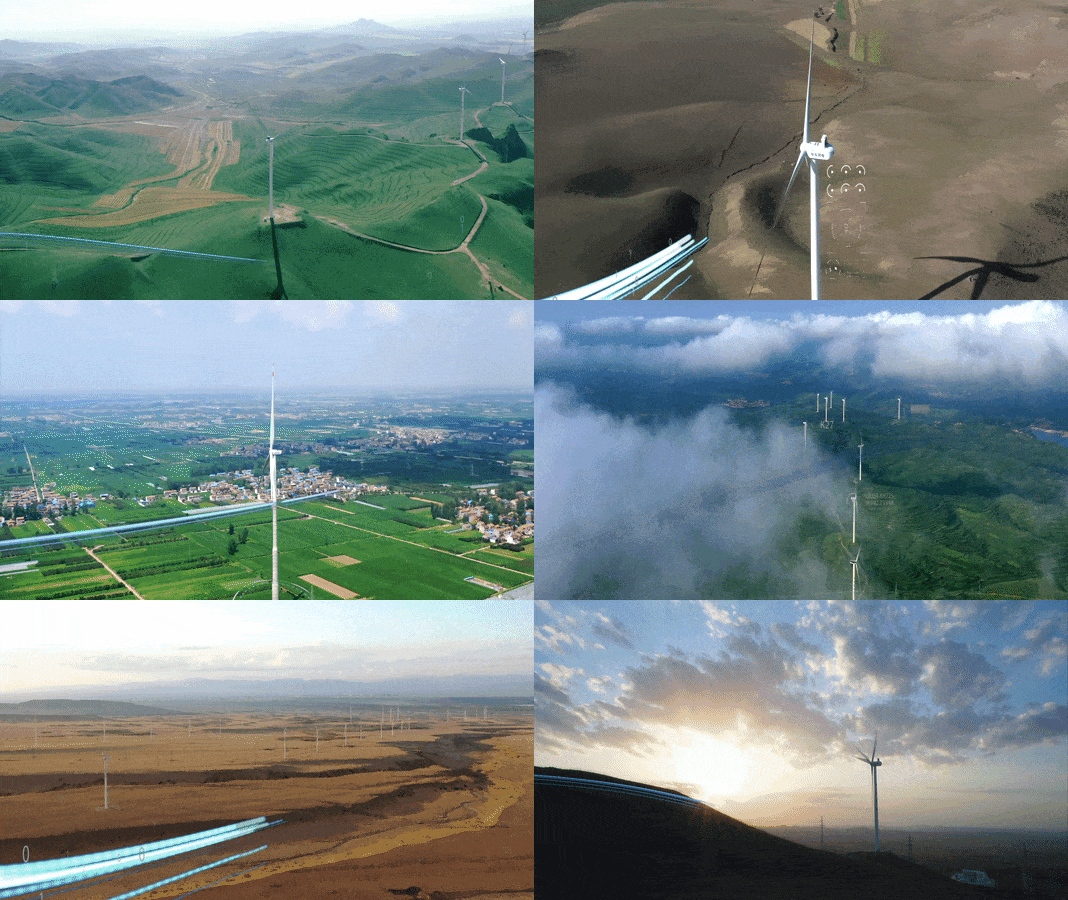
Several commonly used onshore turbine models today have power ratings ranging from 5.X MW to 10.X MW. Taking the 6.25 MW model as an example, the rotor can rotate about 8 times per minute, generating 12 kilowatt-hours of electricity with each rotation. For a wind farm with a total installed capacity of 100,000 kW, equipped with 16 units of 6.25 MW wind turbines, it can generate 280 million kilowatt-hours of electricity annually once connected to the grid. According to estimates, this green electricity can save 112,000 tons of standard coal and reduce carbon dioxide emissions by 264,000 tons each year. This not only creates significant economic value but also plays a positive role in building a new energy system, promoting the green transformation of economic and social development, and contributing to the achievement of the "dual carbon" goals.